
Oral Competition: Interviewing a Famous Person
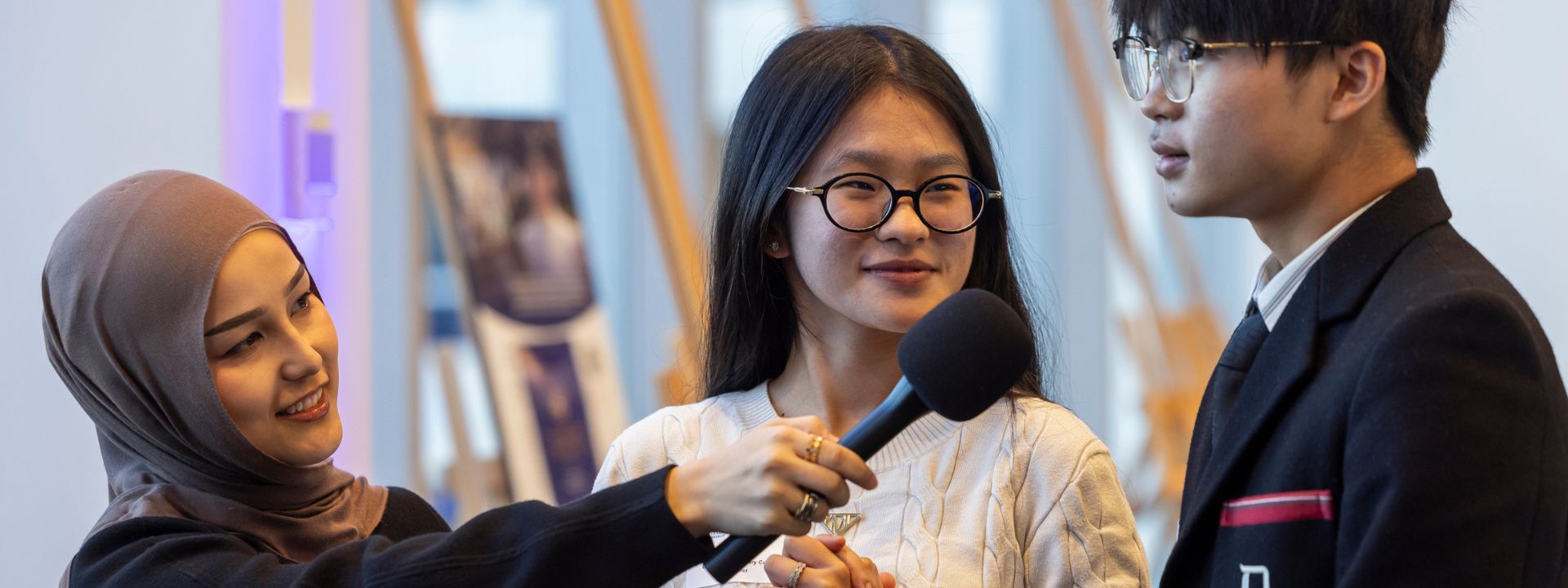
Competition theme
What famous person would you interview? Why would you like to interview them? What would you ask them?
Think of anyone who interests you. It might be a real person, like a K-Pop star or Harry Styles. Or it could be someone from the past, like Albert Einstein. Or a fictional character, like an anime or cartoon character.
Instructions
Steps to take:
- Research the famous person's life, passions, work and the experiences and things that make them interesting.
- Tell us about the famous person. Describe what you found out about them.
- Tell us what you personally find interesting about the famous person.
- Write some questions you would ask the famous person based on their life, passions, work and the experiences and things that make them interesting.
Presentation length: 3-5 minutes, presented live online to a panel of friendly judges.
Competition prizes
- First prizes: AUD$100 retail store gift voucher for 3 winners
- Second prizes: AUD$50 retail store gift voucher for 3 runners-up.
Eligibility and competition dates
To enter students must:
- be currently studying at an English language centre located onsite at an accredited ISP secondary school
- attend a 10-minute mentoring session held online with our friendly English teacher Ms. Denise Cornish at a timeslot from 4pm Melbourne time, on either Wednesday 11 or Thursday 12 November
- attend the live competition for your 10-minute timeslot held online from 4pm Melbourne time, Wednesday 18 November.
The mentoring session is when your friendly English teacher, Ms Denise Cornish, will talk about your presentation and give you tips. Ms Cornish will also check your Webex connection and discuss any improvements or questions you might have. We will send you the mentoring session login information and your time after you register.
How to enter
Places strictly limited. Claim your spot before you miss out! To sign up to the competition, complete the registration form by Friday 6 November.
Example interview - Vincent van Gogh
I’m going to talk about Vincent van Gogh
Vincent van Gogh was a famous Dutch painter who lived between 1853 and 1890. He was a Post-Impressionist painter who is remembered as one of the most famous and influential figures in the history of Western art.
He produced over 2000 artworks that were drawings and oil paintings, but he was not recognised as a worthwhile artist in his lifetime. His artwork now sells for millions of dollars and is displayed in museums worldwide. (brief background) I would like to ask Vincent van Gogh about his art because he was so passionate about art, but sadly never received much appreciation while he was alive. To work so hard and not be recognised for your talent made for a very interesting person.
I would ask Vincent van Gogh three questions.
1. What was your inspiration to draw and paint?
I would like to talk to this question about his passion and what kept him going even though he suffered poverty and depression. I admire him for his resilience and persistence. He was inspired by the hard lives he saw others living and struggling through. He was also inspired by the beauty of the country village he lived in and the colours he saw.
2. What was your favourite painting technique?
I want to ask this questions because his painting technique was to use lots of brightly coloured paint and to use lots of it, applied thickly and in an uneven manner. The art world ridiculed him for his paint application, saying it wasn’t refined and too childlike. But now he is very famous for his painting technique.
3. Did you sell any paintings?
I would like to ask Vincent why he didn’t sell any paintings. I know he felt he needed to paint and didn’t much care whether people bought his work or not. But he did think the art critics were a club of badly informed people who could not see beauty. So, this question is important to me.
Notes to assist you in your competition entry
You should plan and write your oral presentation with the intention of engaging your judging panel.
You will be expected to speak your oral presentation and not read it. So, write up your oral presentation and then make cue cards to assist you to learn your main points. Even though you will be presenting over a video call, the judges will be expecting you to speak directly to them as if they are in the room with you.
Try to use engaging speaking techniques. Pace your oral presentation so that it is not too fast. Pause at important points and try to use some facial expressions to enhance your points…. a smile or well-placed anecdote or humour is often appreciated by your audience.
Your aim is to inform and educate your audience. But your audience also wants to try to understand why you have these opinions. So, using descriptive language will be very important.
Your pronunciation and use of language needs to be clear and appropriate. Make sure you practise and edit your work until you get it ‘just right’. Often practicing giving your speech, in front of others, is very helpful.
You will be judged on the following aspects:
- Content: What information have you used?
- Structure: How have you organised your presentation?
- Non-verbal communication: How did you bring your personality and engage the audience?
- Voice clarity, voice modulation and pronunciation: How did you use your voice? Was there evidence of practice?
Bring your personality to your oral presentation. Tip: hand gestures, smiles, examples of are all great ways to communicate, so feel free to use them.
I look forward to meeting you soon, your friendly English teacher, Ms. Denise Cornish at denisecornish1@gmail.com
Terms and conditions
Limit of one prize per student. Competition prizes are non-transferable, non-refundable, and cannot be exchanged for cash or other alternatives. The department as the competition organiser reserves the right to substitute the prize with one of equal or greater value if necessary. This includes if a competition prize cannot be purchased online from Australia.
Winners will be notified a week after the competition via email. If the winner does not respond within 14 days or is unreachable, an alternative winner may be selected.
The department reserves the right to refuse competition entry for students who do not meet the above eligibility criteria or attend the mentoring and competition sessions.
